
Hope Again? Six reflections on Labour Party Conference and the future of cultural policy
Reflecting on Labour Party Conference 2026, Culture Commons Director & CEO, Trevor MacFarlane FRSA explores a renewed sense of political optimism, the future of cultural devolution and the case for a new cultural settlement that puts the growth of people alongside the growth of regional economies.
Topics covered
Rewiring the state: Why successful devolution must grow people as well as economies.
A new cultural settlement: Who decides, who pays, and what should happen nationally or locally?
From legislation to implementation: How Culture Commons plans to help turn cultural devolution into reality.
Culture across government: What Labour’s plans for health, education, skills and employment could mean for our sectors.
The future of national institutions: Free museums, the BBC and national touring in a more devolved Britain.
Reconnecting with Europe: Creative Europe, international touring and the barriers we still need to dismantle.
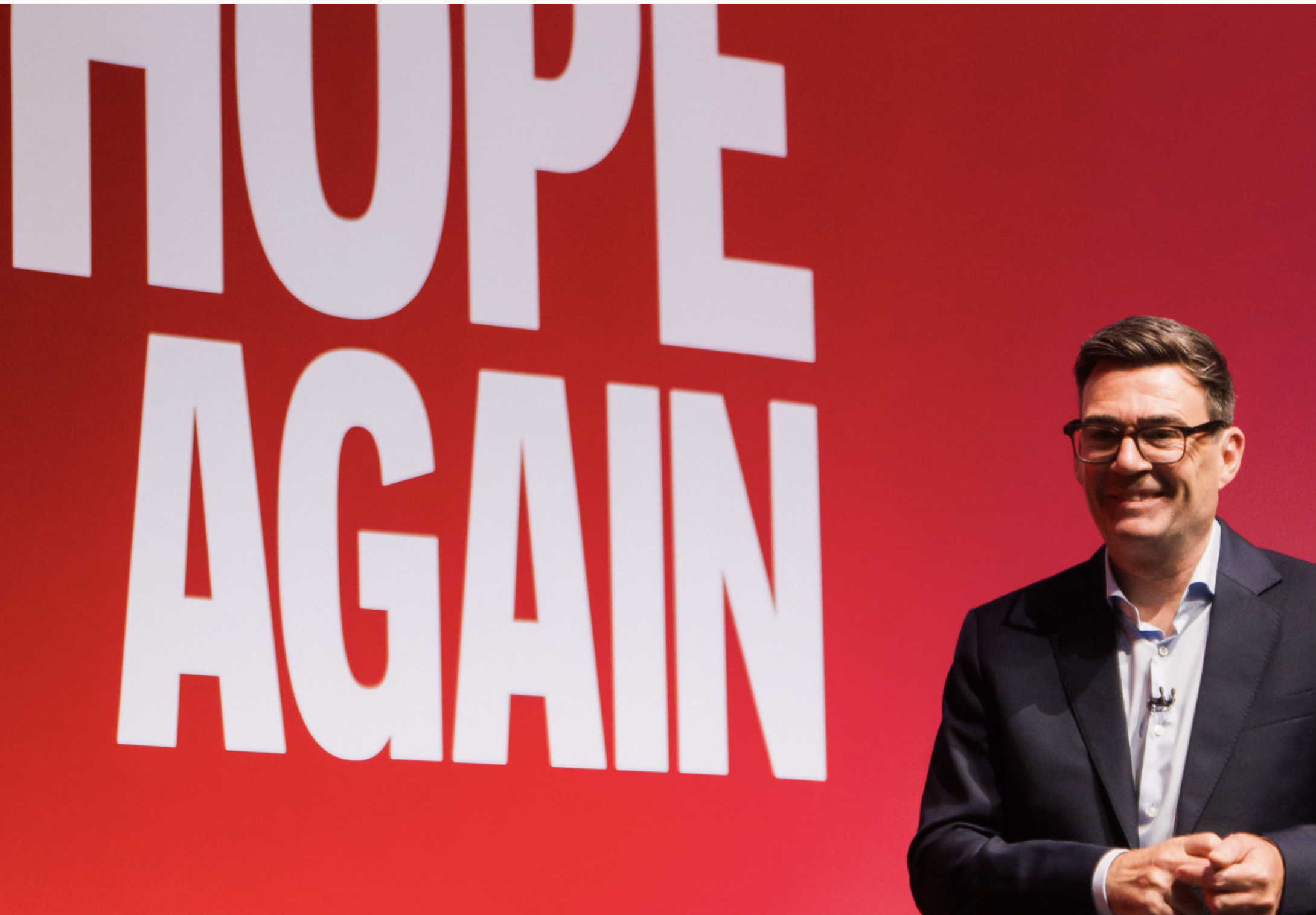
Something shifted at Labour Party Conference this year. And as a Mancunian, I must admit to feeling rather proud watching Andy Burnham deliver his first conference speech as Prime Minister.
His address set out an ambitious programme spanning public services, economic reform, devolution and Britain’s relationship with Europe. But it was the broader political argument that caught my attention.
After two years in government, Labour appeared to be finding a clearer sense of what it wants to achieve, how it intends to exercise power and, perhaps most importantly, whose lives it wants to change.
I spent four days in Liverpool representing Culture Commons at public and private discussions with ministers, MPs, Peers, mayors and sector leaders. The change in mood was palpable.
Having worked for Labour at grassroots level and for some of its most senior Cabinet figures, I’ve always found conference a revealing barometer of the party’s political fortunes. The speeches matter, but it’s often in the smaller rooms that politicians test ideas, build alliances and reveal how they intend to exercise power.
And there was plenty of that going on in Liverpool!
For our creative, cultural and heritage sectors, the implications of the Government’s emerging agenda extend well beyond the announcements made at conference.
I came away increasingly convinced that culture could become one of the most revealing measures of whether Labour’s ambition to rewire the state is succeeding.
Rewiring the state: growing the economy and growing people
For much of the past three decades, English devolution has concentrated on creating institutions, negotiating deals and transferring powers. More recently, attention has turned towards fiscal arrangements, integrated settlements and giving places greater discretion over investment.
All necessary work. But the Government’s ambition to rewire the state suggests something more profound.
Devolution is being connected to a wider political project concerned with tackling inequality, rebuilding public services and restoring people’s influence over the decisions affecting their lives.
The proposed £100 million mayoral apprenticeship service, devolution of the Great Home Upgrade and stronger local authority housing powers offered early indications of what this might mean. Louise Haigh’s emerging role in No.10 North also suggests greater coordination across Whitehall.
But successful devolution cannot be measured through administrative efficiency or economic performance alone.
Growth matters enormously. Stronger regional economies, better employment opportunities and higher living standards are essential to addressing the inequalities that have become entrenched across Britain.
Yet a country can become wealthier without its citizens necessarily feeling that their lives are improving.
People also want places where they belong, opportunities to participate, connections with one another and a sense that their communities have a future.
Culture, creativity and heritage are fundamental to those experiences.
They help shape our relationships with places and each another. They provide opportunities for expression, learning and participation. They connect generations, preserve collective memory and create spaces in which different communities can encounter each other confidently.
They also contribute directly to economic growth, supporting employment, attracting investment and helping make places somewhere people want to live, work and establish businesses.
A more ambitious conception of devolution should therefore concern itself with growing our economy but also helping us to grow as people too.
Culture offers a particularly useful measure of that ambition. Are opportunities expanding beyond already prosperous places? Are previously underserved communities gaining influence? Are public institutions becoming more responsive to the people they serve?
And are we building places in which people can flourish, rather than simply places that perform better against economic indicators?
These are questions about the quality of devolution, not merely its extent.
Towards a new cultural settlement
If Labour intends to change how the state operates, cultural policy provides an interesting place to start.
Our cultural system already spans multiple levels of government and an extraordinarily varied institutional landscape: national collections, arm’s-length bodies, local authorities, mayoral authorities, universities, commercial enterprises, charities and community organisations.
These institutions operate at different geographical scales, with overlapping responsibilities, funding arrangements and forms of accountability.
The result is a rich but often fragmented ecosystem.
A new cultural settlement would reconsider how these relationships are organised: who makes decisions, how responsibilities are distributed, where resources come from and how different institutions work together.
The principle of subsidiarity offers a useful starting point. Decisions should generally be taken as close as practicable to the people affected, while recognising that some functions benefit from coordination at a wider scale.
National touring, international cultural relations, specialist workforce development and research infrastructure cannot sensibly be organised within individual mayoral boundaries.
Meanwhile, cultural planning, community participation and many investment decisions depend on understanding the distinctive circumstances of particular places.
Some responsibilities will inevitably be shared.
The aim should be a more coherent system in which national coordination and local discretion reinforce one another.
And there is the small matter of money. Devolving responsibilities without adequate resources or institutional capacity risks becoming an expensive exercise in merely passing the buck.
Nor should cultural organisations be valued exclusively for their contribution to other government priorities.
Culture has intrinsic value. A sophisticated government needs to be comfortable recognising that people deserve opportunities to experience, create and participate in culture because these things enrich human life.
Not every performance needs to improve productivity. Not every museum visit needs to reduce pressure on the NHS.
The Prime Minster’s conference speech and the emphasis of his Cabinet during conference has opened up room for both arguments here: culture as something valuable in its own right, and cultural infrastructure as an important contributor to wider public policy objectives.
Indeed, the strongest cultural settlement would protect that independence while enabling institutions to contribute more systematically to health, education, economic development and community wellbeing.
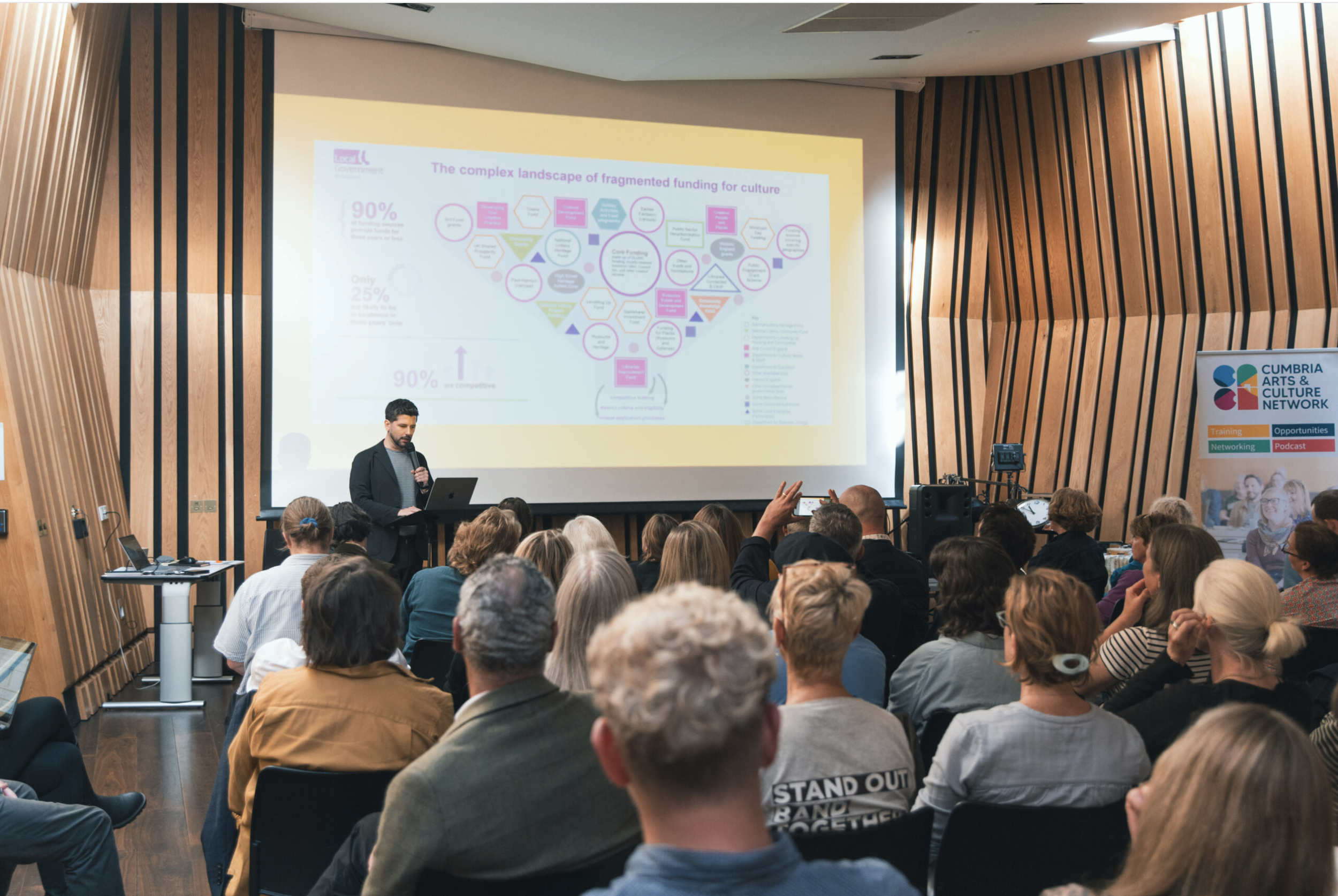
Trevor MacFarlane FRSA delivering a keynote at a gathering of local government and cultural sector leaders in Cumbria regarding cultural devolution.
Cultural devolution: from legislation to implementation
Earlier this year, Culture Commons’ research and advocacy helped secure culture as a formal competence within the English Devolution and Community Empowerment Act.
This followed two years of open policy development involving 30 core partners, six universities and more than 250 organisations.
An important breakthrough, certainly. But legislation provides the authority for change, not the arrangements through which it happens.
Conference offered encouraging opportunities to discuss implementation with senior figures across government.
One particularly enjoyable conversation came at a roundtable convened by What Next?, where I caught up with new Arts Minister Ruth McKenzie.
Ruth worked with me during the COVID-19 pandemic to encourage England’s mayors to support creative freelancers who had fallen through gaps in national schemes. It was good to reconnect with a rather different set of challenges on the table.
I had nevertheless expected a bit more detail at conference from Lisa Nandy as Secretary of State about the next stages of devolution and local government reorganisation.
With the tectonic plates of English governance shifting, we’ve heard plenty about the destination, but rather less about the potential route.
The forthcoming Budget and the Government’s ten-year programme may provide some answers.
In the meantime, there is considerable work to be done.
The Local Government Association (LGA) and Chief Cultural & Leisure Officers Association’s (CLOA) proposed National Cultural Framework offers an important articulation of the ambitions of local authorities and the principles that might underpin devolution arrangements.
But turning those principles into functioning institutions will require careful design.
Mayoral authorities will need appropriate capabilities. National bodies may need to adapt their responsibilities. Local government must retain meaningful influence, and communities need opportunities to shape decisions rather than simply respond to them.
Different places will also require different arrangements. What works in Greater Manchester may not be inappropriate for Cumbria.
It’s why Culture Commons is developing an independent national Open Policy Development Platform for Cultural Devolution.
Building on our existing research, the platform would bring government, mayoral authorities, local councils, national institutions, cultural organisations and communities together to design, test and evaluate practical arrangements for cultural governance, planning, investment and accountability.
We want to explore new approaches to Culture Forums, Cultural Ecosystem Plans, shared investment mechanisms and the relationships between national and local institutions.
Crucially, this means moving beyond consultation towards genuine policy experimentation, with pilots capable of informing wider reform.
Our conversations with senior figures across DCMS, MHCLG and No.10 North are reinforcing the appetite for this work.
Culture Commons’ independence enables us to convene institutions with very different responsibilities and interests, while our research provides a substantial foundation on which to build.
Culture in the everyday infrastructure of government
Lisa Nandy’s conference speech offered another indication of how cultural policy might connect with the Government’s wider ambitions.
Alongside proposals on online safety and recruiting 1,000 youth workers, she argued for renewed opportunities in arts, music, sport, dance and drama, particularly where provision has diminished.
Her argument was compelling: government cannot simply restrict young people’s online lives without investing in opportunities elsewhere.
Similar questions arise in health and social care.
Burnham’s proposed National Care Service could provide opportunities to reconsider how cultural organisations contribute to prevention, wellbeing, social connection and quality of life throughout the life course.
But these contributions cannot depend indefinitely on isolated projects and short-term funding.
If cultural infrastructure is to contribute systematically to public services, commissioning, investment and institutional partnerships must evolve accordingly.
The same applies to skills.
The new mayoral apprenticeship service and Business Secretary Jonathan Reynolds’ commitment to strengthen protections for workers incorrectly classified as self-employed both have implications for creative industries characterised by freelancers, microbusinesses and portfolio careers.
A more devolved skills system could respond to regional creative economies, provided programmes reflect the realities of cultural employment.
These are practical questions of policy integration. They require government departments, public agencies and cultural institutions to work across boundaries that have historically kept their activities separate.
The Government’s ten-year programme offers an opportunity to establish how those relationships might develop. We strongly support calls to ensure culture is recognised within that wider programme.
National institutions in a more devolved country
One personal highlight of conference was joining Lisa Nandy at Tate Liverpool, hosted by Art Fund, where she reaffirmed universal free admission to England’s national museums and galleries, including for international visitors.
Culture Commons has worked behind the scenes with HM Treasury and DCMS as this policy has been considered, so I was particularly pleased to see the Government maintain a longstanding Labour commitment.
Sometimes the most important policy decision is knowing what not to tinker with.
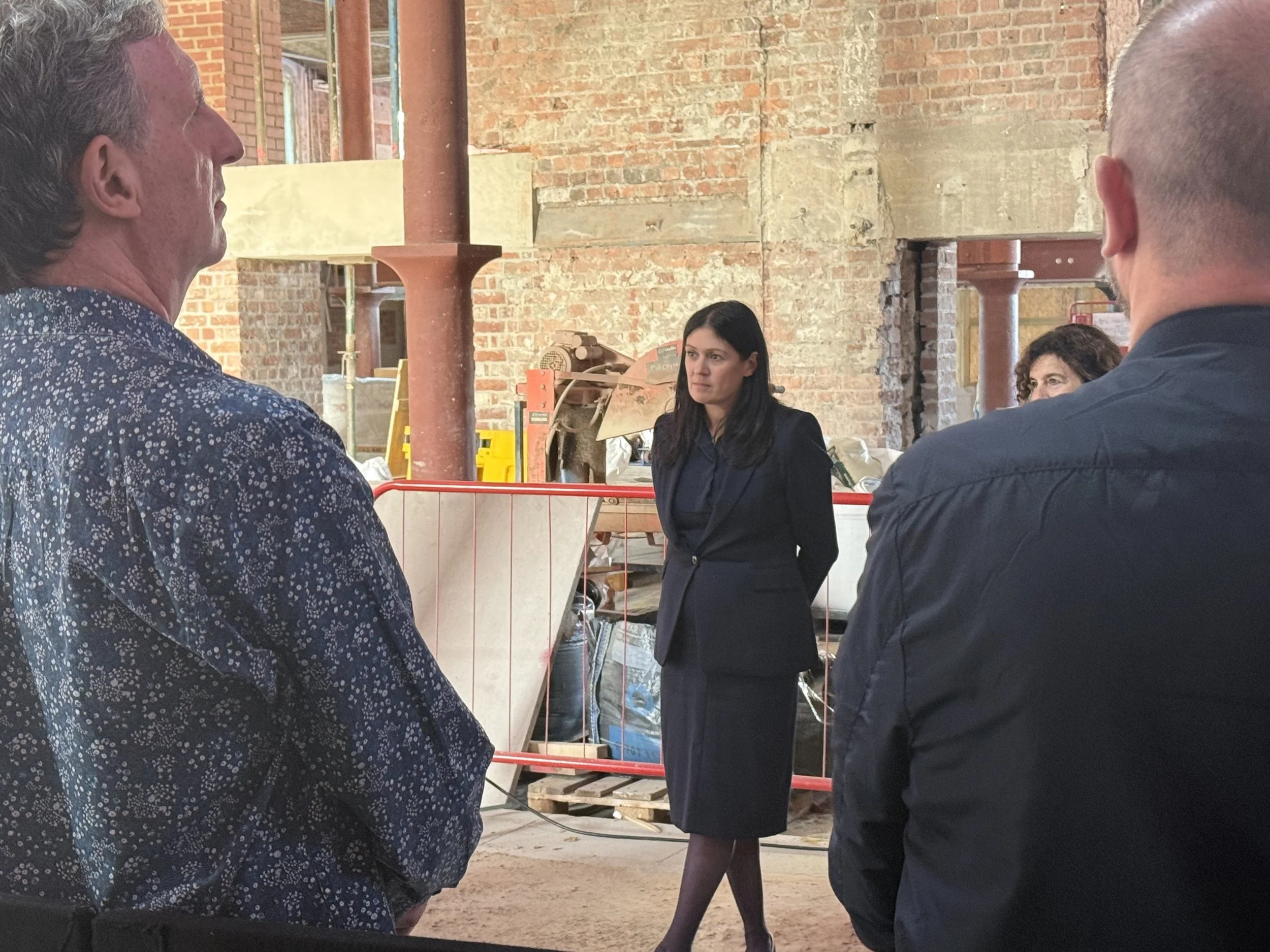
Secretary of State for DCMS, Lisa Nandy MP at the Tate Liverpool (under construction).
At another event, Nandy reaffirmed support for the BBC and public service broadcasting more broadly as Charter Renewal progresses, while challenging media leaders to better represent the communities they serve.
These debates speak to an important question for a more devolved country: how can national institutions retain their distinctive functions while becoming more responsive to the places and communities they exist to serve?
Our forthcoming research with England’s large-scale national dance touring organisations examines precisely these relationships, exploring how national infrastructure supports regional venues, employment, education, health and international cultural exchange.
The findings underline the importance of thinking about cultural ecosystems as interconnected systems rather than collections of individual organisations.
National and local provision are not competing alternatives. Each can strengthen the other.
Europe: rebuilding relationships
Burnham’s commitment to review Britain’s relationship with the European Union was another significant development.
Having worked as a Labour adviser in the European Parliament, I’ve seen first-hand how important cultural cooperation is to Britain’s economic, social and diplomatic relationships.
Rejoining Creative Europe needs to be a real priority.
Beyond investment, the programme supports international partnerships, creative exchange and opportunities for organisations and artists to collaborate across borders.
There is also the unfinished business of cultural mobility.
Visas, work permits, carnets, cabotage restrictions and administrative costs continue to complicate international touring, particularly for freelancers and smaller organisations.
A more constructive relationship with Europe should create opportunities to address these barriers.
Our cultural relationships are part of Britain’s international infrastructure. They deserve attention alongside trade, investment and diplomacy.
Hope is back. Now comes the hard part.
I left Liverpool feeling more optimistic than I have at a Labour conference for some time.
Perhaps that’s partly the working-class Mancunian background in me. But I suspect many watching Burnham recognised that something had shifted too.
The Government is beginning to connect a clearer political purpose with substantial questions about how the country is governed.
Hope, however sincerely felt, doesn’t run a country. But it can help propel it forward.
Turning that ambition into lasting reform requires something less glamorous: the patient work of institutional design, investment, experimentation and implementation.
And all this must happen without vast amounts of additional public money swishing around the coffers.
For Culture Commons, conference reinforced how closely cultural policy is becoming connected to wider questions about the future of the state.
Our cultural devolution programme examines the distribution of responsibilities and decision-making powers. Our work on the National Cultural Data Observatory is developing the shared evidence infrastructure needed to inform decisions across different geographical scales. Our contributions to the Culture and Heritage Capital work explores how cultural value can be understood within investment decisions. And our national consultancy research demonstrates the relationships between national infrastructures like civic museums and large-scale dance touring and local cultural ecosystems.
Together, these programmes contribute to a larger proposition: a new cultural settlement capable of combining national coordination, local democratic agency, better evidence and more sustainable investment.
Having helped secure culture’s place within England’s new legislative framework for devolution, our attention is now firmly on implementation.
But there is a wider ambition here too.
If devolution is to mean something in people’s everyday lives, its success must be judged by more than the number of powers transferred or the economic output of particular places.
We should also ask whether people feel more connected, whether communities have greater influence, whether opportunities are distributed more fairly and whether the places we inhabit are becoming more interesting, inclusive and fulfilling places to live.
Economic growth and human flourishing are not competing objectives. Done well, they reinforce one another.
That is the kind of devolution worth pursuing.
And if Labour really intends to rewire the state, culture, creativity and heritage absolutely must be part of the policy architecture from the outset.
Whether you’re navigating devolution, rethinking your cultural policies, developing new strategic partnerships or looking for opportunities for new research and collaboration, we’d love to hear from you.
Get in touch: contact@culturecommons.uk