
UK Parliament agrees government amendment to include ‘Culture’ in flagship Devolution Bill
The move sees cultural devolution take a significant step further as English regions prepare to take on new powers and responsibilities for the arts, culture, creativity and heritage.

MPs in the UK Parliament have come together to endorse the inclusion of ‘culture’ within the English Devolution and Community Empowerment Bill - backing a proposal developed and advanced by Culture Commons.
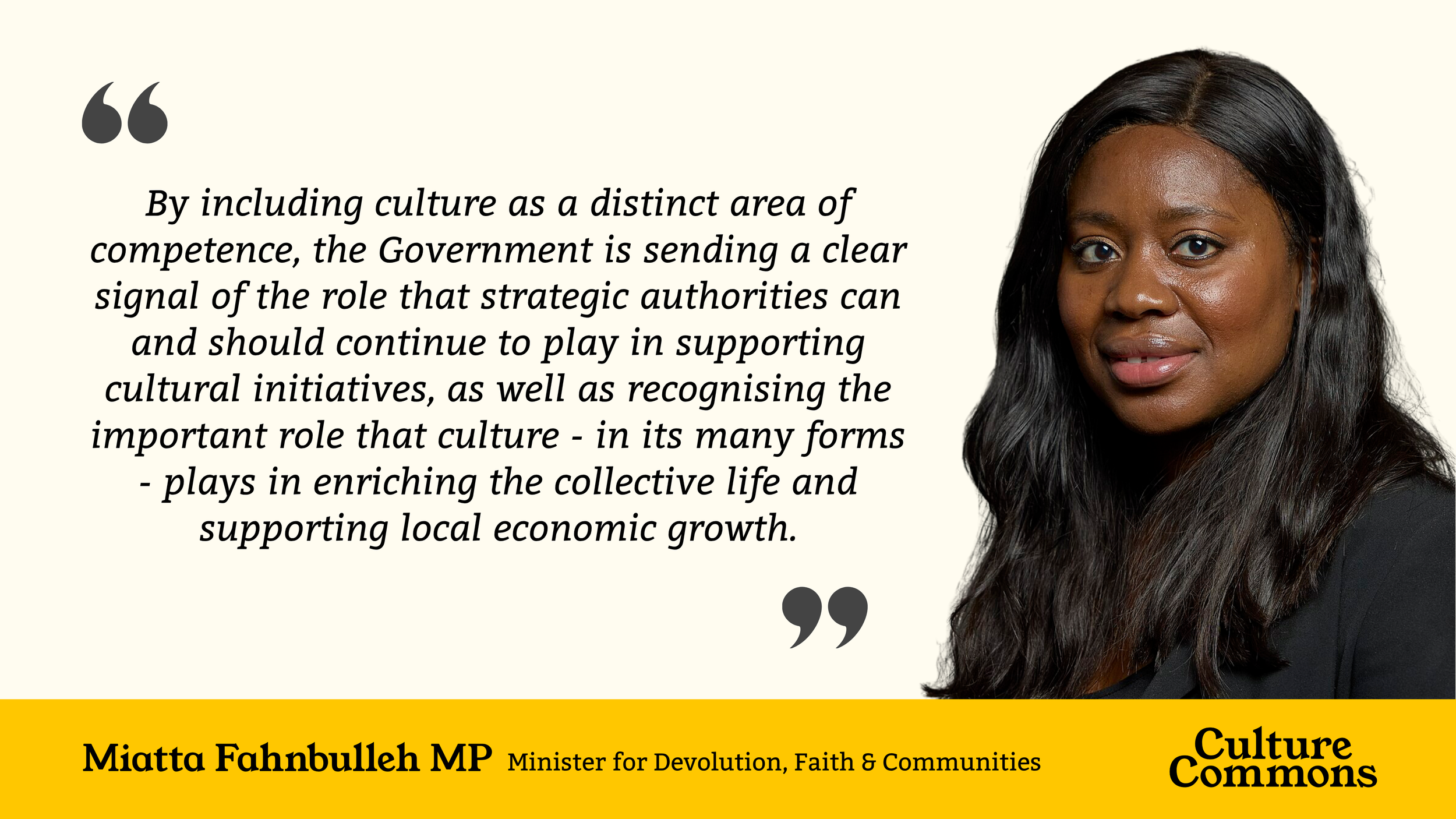
The amendment was brought to the House of Commons by the Minister for Devolution, Miatta Fahnbulleh MP, and has now been approved as part of the Bill’s final stages of its passage.
This clears the way for the legislation to proceed to Royal Assent later this year with culture firmly embedded, at which point it will become law.
From proposal to legislation
Earlier this year, Culture Commons set out the case for including culture as a formal area of competence within the Bill, drawing on more than two years of research and open policy development.
That proposal was taken up by the UK Government and subsequently endorsed by the House of Lords last month. The House of Commons considered the amendment in detail today, endorsing the position.
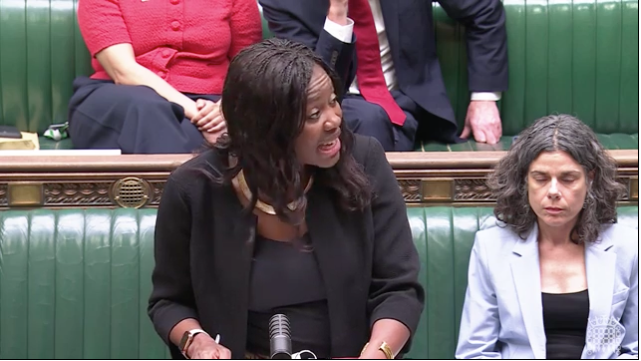
Miatta Fahnbulleh MP
Minister for Devolution, Faith & Communities introducing the amendment in the House of Commons earlier today
What the Bill does
The English Devolution and Community Empowerment Bill is the UK Government’s flagship legislation to transfer powers from Whitehall to strategic authorities, creating a more consistent framework for local and regional decision-making.
By including culture within the Bill, our sectors will now sit alongside other policy areas such as transport, housing, skills, economic development and public service reform as a formal area of competence.
It also addresses a key gap in the original drafting of the Bill. While the ‘creative industries’ were well platformed within an ‘economic growth and regeneration’ competence, the wider cultural and heritage sectors were not explicitly included.
This amendment brings the full ecosystem into scope, recognising the interdependence between economic growth and social, civic and cultural value.
In practical terms, this means that regional leaders will be able to integrate the creative, cultural and heritage sectors into how places are governed, funded and developed - rather than treating them as secondary or downstream beneficiaries of other sectors.
A mandate for delivery
With the Bill now moving towards Royal Assent, the focus shifts from policy change to implementation.
This is where the work really begins!
Ensuring that cultural devolution delivers meaningful change will require new approaches to decision-making, investment and collaboration that brings different stakeholders together in more coordinated and inclusive ways.
“Without culture at the table, devolution risked becoming little more than a transfer of bureaucracy. With it, communities now have a real opportunity to see and feel the difference in the places they live.”
Next steps
To support this, Culture Commons is now developing an independent national think-and-do tank dedicated to cultural devolution.
This will operate as a not-for-profit, partnership-based programme, bringing together:
Local authorities and strategic authorities
Creative, cultural and heritage sub-sectors
The workforce (including freelancers and the self-employed)
Communities and members of the public
National arm’s-length bodies, funders and support bodies
Research partners
Together, we will work through the practical implications of cultural devolution and develop policy, testing approaches and building the frameworks that could support a new sub-regional mandate.
The focus will be on turning powers into practice: ensuring that cultural devolution is implemented in a way that is inclusive, place-based and responsive to the diversity of communities across England.
We’ll be thinking carefully about things like:
Opportunities to unlock new resource to facilitate cultural devolution preparedness
The enhancement of the arms’ length principle at the sub-regional scale
Bringing the public into joint decision making to go beyond top-down consultation
The articulation of Cultural Rights in an increasingly devolved policy landscape
improving data, evidence and evaluation through a partnership based National Cultural Data Observatory
Get involved
This is a formative moment for the sector.
If you are interested in being part of this next phase of work, we would welcome a conversation. We are now actively engaging potential partners to help shape and deliver the think-and-do tank👇