
National report on children’s services recognises potential of a National Cultural Data Observatory
A major new national report on connected data for children’s services has highlighted the National Cultural Data Observatory (NCDO) as an example of the kind of evidence infrastructure needed to support better public policy across the UK.
A major new national report on connected data for children’s services has highlighted the National Cultural Data Observatory (NCDO) as an example of the kind of evidence infrastructure needed to support better public policy across the UK.
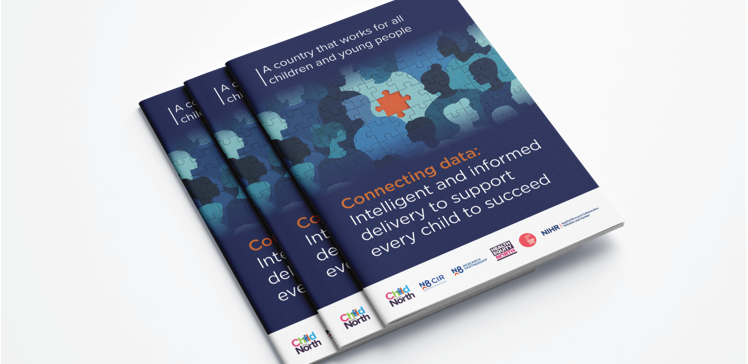
Published by Child of the North, the N8 Research Partnership and partners, Connecting Data: Intelligent and informed delivery to support every child to succeed argues that connected data should be treated as essential public infrastructure rather than simply a technical issue. The report makes the case for a federated, place-based approach that allows local organisations to retain control of their data while contributing to a shared national evidence ecosystem.
The National Cultural Data Observatory is included alongside major national initiatives such as Secure Data Environments, CADRE, Born in Bradford and Symphonia as an example of emerging infrastructure that can strengthen evidence-based policymaking across different policy domains.
For Culture Commons and our partners in The Audience Agency, the Centre for Cultural Value and MyCake, the reference is significant because it demonstrates that the challenges facing cultural are not unique. Across health, education, local government and children’s services, policymakers are increasingly grappling with the same question: how can fragmented evidence be connected so that better decisions can be made?
A shared challenge across public policy
The Child of the North report argues that public services already collect vast amounts of information, but that disconnected systems prevent practitioners and policymakers from understanding people’s lives as a whole. It concludes that the issue is not a lack of data, but a lack of the infrastructure, governance and institutional arrangements needed to connect existing evidence safely and meaningfully.
That diagnosis closely mirrors the challenges identified through the development of the National Cultural Data Observatory.
Throughout the NCDO’s blueprint phase, Culture Commons led engagement with policymakers across combined authorities, local government and central government. A consistent message emerged: decision-makers do not simply need more data related to the creative, cultural and heritage life of their areas. They need evidence that connects culture with wider public outcomes such as economic growth, health, wellbeing, skills, place and community resilience.
The Observatory has therefore been designed not as another dataset, but as shared evidence infrastructure capable of connecting existing information, reducing duplication and helping different organisations ask better questions of the evidence they already hold.
Beyond culture
One of the most striking themes running through the Child of the North report is that connected data should be understood as national infrastructure that enables learning across places while preserving local ownership and accountability. Rather than advocating a single central database, the report calls for “an interconnected ecosystem in which trusted local systems generate insight, improve services, and support research and innovation at national scale.”
That principle sits at the heart of the NCDO. The Observatory is being developed as a distributed infrastructure that brings together datasets, research, policy insight and lived experience without requiring organisations to surrender ownership of their information. By harmonising evidence rather than centralising it, the NCDO aims to support better policymaking at neighbourhood, local, regional and national levels.
Growing recognition of evidence infrastructure
As governments increasingly pursue missions, prevention and place-based policymaking, there is growing recognition that effective public policy depends on effective evidence infrastructure.
The inclusion of the National Cultural Data Observatory within the Child of the North report suggests that cultural evidence is becoming part of a wider national conversation about how connected data can improve public services, strengthen research and support better decision-making.
For Culture Commons, it reinforces an important principle underpinning our work: building stronger evidence infrastructure for culture is not simply about serving the cultural sector. It is about ensuring that culture can be understood, evaluated and embedded within the wider public policy challenges that shape people’s lives and places.
The National Cultural Data Observatory is currently being developed through a partnership between The Audience Agency, the Centre for Cultural Value, MyCake and Culture Commons, building on the blueprint published earlier this year and continuing work to create a shared, intelligent evidence ecosystem for the UK’s creative, cultural and heritage sectors. Find our more about the project here: