
Influencing the debate on UK broadcasting and BBC Charter Renewal
Over the past week, Culture Commons has been working closely with a group of cross-party peers in the House of Lords, briefing them on fast-moving developments in UK broadcasting and, in particular, the future of our public service broadcasting (PSB) system.
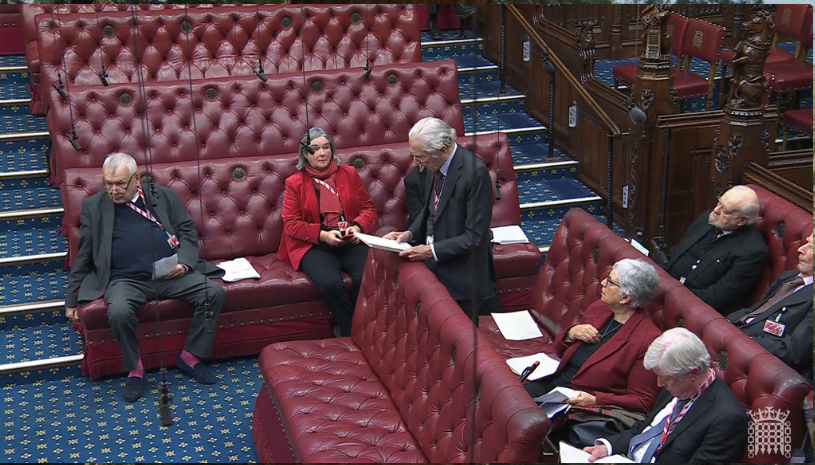
This engagement feeds directly into today’s Lords debate on the future of broadcasting in the UK, instigated by Lord Fowler. The timing is critical. With the BBC Charter Review Green Paper now published, policymakers are actively shaping the framework that will govern public service broadcasting for the next decade and beyond.
At moments like this, the questions are not merely technical or institutional. They go to the heart of what public service broadcasting is for — and what kind of media environment the UK wishes to sustain in an increasingly fragmented, polarised and digitally mediated world.
Why public service broadcasting still matters
In our conversations with Peers, we have been clear that public service broadcasting should not be understood simply as a legacy model competing for attention in a crowded marketplace. It is better understood as part of the UK’s civic and cultural infrastructure.
At its best, PSB underpins shared facts, enables democratic debate, and supports social cohesion across difference. Like other forms of infrastructure, its value is often most visible when it is weakened. Treating PSB as a core public good - rather than a discretionary extra - is therefore essential to any serious discussion about its future.
Universality in a digital media environment
One of the central risks in the current debate is the quiet erosion of universality. In an on-demand, algorithmically driven media ecosystem, universality does not happen by accident. It is a strategic choice.
Without it, we lose the possibility of a shared public conversation. Instead, we fragment into parallel media worlds, shaped by commercial incentives and opaque recommendation systems. If public service broadcasting is to retain its distinctive public value in the digital age, universality must be treated not as an anachronism, but as a design principle.
Impartiality as a professional standard
Impartiality remains one of the most contested - and most misunderstood - aspects of public service broadcasting.
We have emphasised that impartiality is not about mechanically balancing opinions, nor about platforming unevidenced claims in the name of symmetry. It is a disciplined professional commitment to evidence, context and truth, applied without fear or favour - even under political or commercial pressure.
Properly understood, impartiality is not a constraint on high-quality journalism. It is one of the foundations of public trust, and one of the reasons PSB continues to command confidence in a low-trust media environment.
Domestic choices, global consequences
Finally, the debate cannot be confined to the UK alone. The BBC’s credibility on the international stage - including through the World Service - rests on the strength, independence and integrity of its domestic public service settlement.
Decisions taken through Charter Renewal will therefore shape not only the UK media landscape, but the country’s global cultural and democratic influence. Where trusted information is increasingly contested, that influence matters.
A moment for renewal, not dilution
Charter Renewal is often framed as a process of reform. Reform may well be necessary. But reform should be judged against a simple test: does it strengthen or weaken the ability of public service broadcasting to serve the whole public in a rapidly changing media environment?
At this moment of choice, the risk is not that PSB fails to change, but that it changes in ways that quietly erode the very qualities that make it valuable.
Culture Commons will continue to work with parliamentarians across both Houses to ensure that culture, creativity and public value remain central to this debate - and that public service broadcasting is renewed, not diminished, at the moment it is most needed.